

Water feels simple—until it isn’t.
In most homes, it’s background noise. You turn on a tap, use what you need, and move on. But step into a factory, a lab, or even a mid-sized production unit, and suddenly water becomes something else entirely. It’s no longer just a resource. It’s a variable. Sometimes even a risk.
And that’s where things start to get interesting.
The Shift From “Usable” to “Precise”
In industrial environments, “good enough” water usually isn’t good enough.
Tiny impurities—minerals, ions, trace metals—can interfere with processes in ways that aren’t immediately obvious but become costly over time. Equipment efficiency drops. Product consistency fluctuates. Maintenance costs creep up quietly.
This is where high purity water enters the conversation. Not as a luxury, but as a necessity.
It’s about removing variables. Creating a controlled environment where water behaves predictably, every single time.
Because when you’re running operations at scale, even small inconsistencies can ripple outward.
Why Deionization Matters in Industry
There are different ways to purify water, but deionization has carved out a very specific role in commercial and industrial setups.
At its core, it’s about removing charged particles—ions—from water. Calcium, magnesium, sodium, silica… all the things that might interfere with sensitive processes are stripped away through ion exchange.
What’s left is water that’s extremely low in conductivity, meaning it carries almost no electrical charge.
That might not sound like a big deal at first, but in industries like electronics manufacturing or pharmaceuticals, it’s critical.
It’s the difference between a process running smoothly and one that keeps hitting invisible friction.
Scaling Up: When Small Systems Aren’t Enough
If you’ve ever seen a basic deionization unit, you might think, “This seems manageable.”
But industrial needs are rarely small.
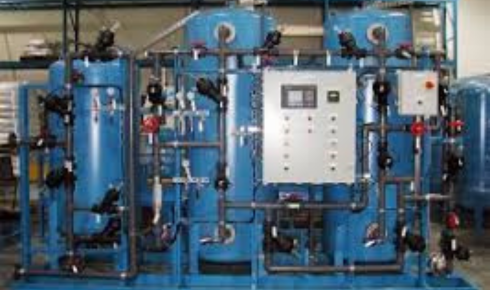
That’s where commercial di water systems come into play. These systems are designed to handle large volumes of water continuously, often integrated directly into production lines.
They’re not just bigger—they’re smarter. Automated regeneration cycles, monitoring systems, and pre-treatment stages all work together to maintain consistent output.
Because consistency, in this context, is everything.
The Role of an Industrial Deionizer
When people refer to an industrial water deionizer, they’re usually talking about a system that’s built for durability and precision under demanding conditions.
It’s not just about purifying water once—it’s about doing it reliably, over and over again, without disrupting operations.
These systems often work alongside other treatment methods, like reverse osmosis or filtration, to ensure that the incoming water is already partially cleaned before it reaches the deionization stage.
That combination improves efficiency and extends the life of the system.
It’s a layered approach. Thoughtful. Intentional.
Where It Really Makes a Difference
The impact of deionized water isn’t always visible, but it’s felt across multiple areas.
In manufacturing, it helps maintain product quality. In labs, it ensures accurate results. In power plants, it protects equipment from scaling and corrosion.
Even in industries you might not immediately think of—like automotive detailing or food processing—water quality can influence outcomes more than expected.
It’s one of those behind-the-scenes factors that quietly supports everything else.
The Cost of Ignoring Water Quality
Here’s something worth considering: poor water quality doesn’t usually cause immediate failure.
It’s slower than that.
Mineral buildup reduces efficiency bit by bit. Residue affects precision over time. Maintenance needs increase gradually.
And before you know it, what seemed like a minor issue has turned into a recurring expense.
Investing in proper water treatment isn’t just about improving processes—it’s about preventing those slow, cumulative losses.
Maintenance: The Reality of Running These Systems
No system, no matter how advanced, runs forever without attention.
Resin beds need to be regenerated or replaced. Filters need to be checked. Monitoring systems need occasional calibration.
But here’s the thing—modern systems are designed with this in mind. Automation has made maintenance more predictable, less reactive.
It’s not about constant oversight. It’s about staying ahead of potential issues.
And in most cases, that’s a manageable trade-off.
Choosing the Right Setup
There’s no single blueprint for industrial water treatment.
The right system depends on your specific needs—volume, input water quality, required purity levels, and how the water is being used.
That’s why planning matters.
Jumping into a solution without understanding your requirements can lead to overinvestment or, worse, underperformance.
A tailored approach always works better.
A Subtle but Important Shift
What changes once you start treating water as a critical component of your operations?
You stop seeing it as a background utility.
You start recognizing it as something that directly influences performance, efficiency, and even profitability.
And that shift—though subtle—can reshape how decisions are made across the board.
Final Thoughts, Without Overcomplicating It
Water doesn’t need to be complicated. But in industrial settings, it does need to be precise.
Deionization offers a way to achieve that precision. Not by overengineering things, but by removing the variables that don’t belong.
If your processes depend on consistency, if your equipment demands reliability, if your output needs to meet exact standards—then water quality isn’t just a detail.
It’s part of the foundation.
And like any good foundation, it’s worth getting right.
