

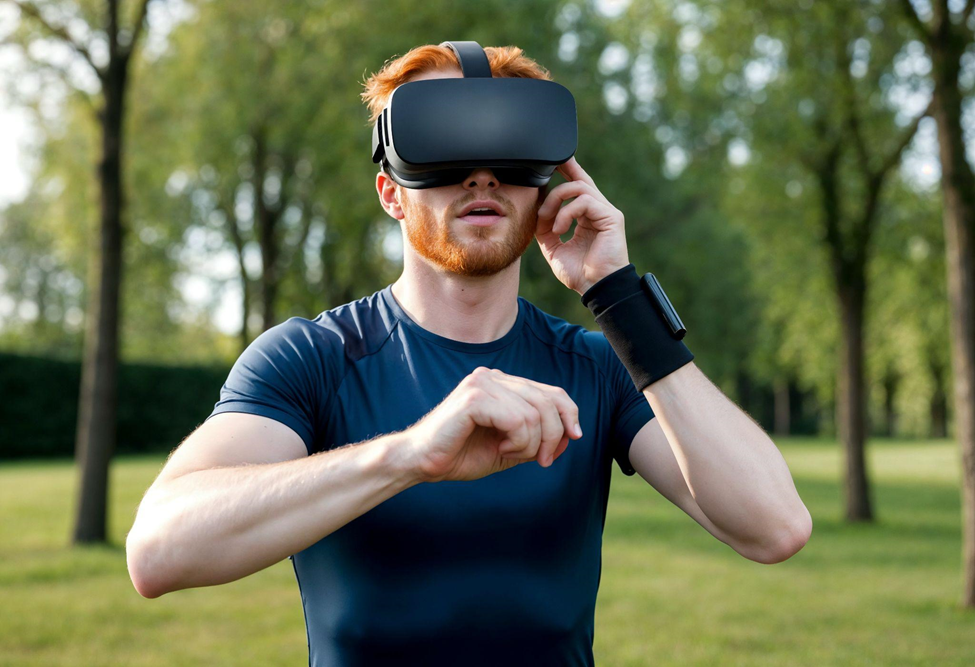
Previously, the smartwatch was merely a handy tool for checking notifications, counting the number of steps, and possibly even doing some workouts. All of this has greatly evolved in recent years. In 2026, the emphasis will be largely on personal health, with the wearable technology monitoring such parameters as sleep, heart rate, blood oxygen level, recovery, and others. However, the real evolution of wearable technology is not just the increase in collected data. These devices try to find ways to make it useful for people.
The wearables market is growing, and health and fitness tracking remains among the most promising niches within it. The current generation of devices is no longer focused on the idea of a miniaturised smartphone worn on the wrist. The manufacturers explore various other approaches, including design and battery life.
From Counting Steps to Understanding Health
The simple attraction of fitness trackers in the past was step counting, measurement of distances traveled, and estimating calories burned. These features remain valuable, but there is an increasing consumer expectation for much more.
Smartwatches and fitness trackers today can track sleep patterns, heart rates, blood oxygen levels, and physical activity. There are some watches that even offer ECG and blood pressure monitoring capabilities, and new ones feature various metrics and scores that are meant to assist the user in recovering, staying fit, and healthy. Escort Athens interested in wearable technology can use such features to better understand their activity levels and fitness habits.
This is revolutionizing the way people perceive their daily wellness. It used to be that one could only track one’s fitness level after going to the gym or seeing a doctor, and now the user can spot trends over days and even weeks. A person will notice that his bad sleep impacts his workouts, or that he becomes less active during very stressful times. It does not give the answer itself, but it prompts the person to analyze his behavior.
AI Is Making the Data More Personal
Another step forward would be the application of artificial intelligence to analyse all of this data. Getting the data about our health is fairly easy; understanding what it all means is quite difficult.
Wearable devices produce enormous volumes of data, and the same metric may have different meanings depending on the situation. A person’s accelerated heartbeat, for instance, might have occurred because of physical activity, or maybe out of stress or excitement or even because of walking up the stairs. This is particularly relevant for Bangkok escort who use fitness trackers, as individual readings need to be considered alongside everyday activities and circumstances. Recent studies of wearable data point exactly to this: context is essential when interpreting data in order to get useful insights about a person’s health.
Artificial intelligence may help us make such datasets more understandable by finding patterns in them and offering them in an easily comprehensible way. Instead of having endless amounts of numbers, future wearable devices will give people more personalized data along with some useful recommendations.
This doesn’t mean that a smartwatch will replace a physician. All this means is that technology may increase people’s awareness of themselves.
Smaller Devices, Less Distraction
In fact, the future of wearable technologies may not be all about increased screens or notifications. The newest devices actually go in the other direction.
Screen-less fitness bands attract attention as devices that collect information about the user’s health and fitness without constant interaction with the screen. One example is Garmin’s recently introduced device named Cirqa, which offers such functions as sleep tracking, heart rate tracking, blood oxygen tracking, and recovery features in the screen-less device.
The point is that the devices of this kind are perfect for people interested in the information about their health but not wishing to have yet one more thing distracting them.
There Is Still a Need for Caution
The growing popularity of wearable health tracking also raises an important question: how much should people trust these devices?
Wearables can be extremely useful for observing trends, but individual readings are not always equivalent to clinical measurements. Even increasingly sophisticated devices have limitations, and health information should be interpreted carefully. Escorts Limassol who rely on wearable technology can benefit from looking at broader patterns instead of treating every individual reading as an accurate medical result.
That distinction becomes particularly important as companies introduce features that sound increasingly medical. A wearable might identify an unusual pattern or encourage someone to seek professional advice, but it should not automatically be treated as a diagnostic tool.
The real value of wearable technology may therefore be less about replacing traditional healthcare and more about encouraging better awareness between medical appointments.
