

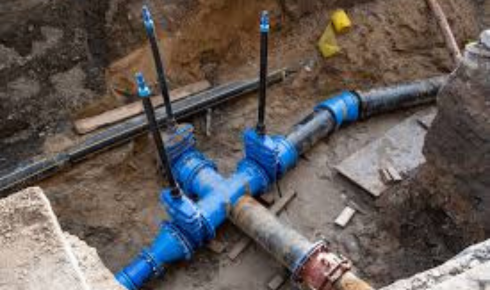
There’s a different kind of pressure when something goes wrong in a commercial setting. It’s not just about inconvenience—it’s about interruption. Work slows down, customers notice, operations take a hit. And suddenly, something as basic as water becomes the center of attention.
Most businesses don’t think about their water systems on a daily basis. They just expect them to work. And honestly, they usually do—until they don’t.
The Moment You Realize It’s Not a Small Problem
It often starts quietly. A drop in water pressure. A sink that takes longer to fill. Maybe a faint discoloration that raises an eyebrow but doesn’t immediately cause alarm.
But in commercial environments, even small issues can ripple outward quickly. A restaurant can’t function without reliable water. A manufacturing unit depends on consistent flow. An office building needs everything running smoothly for hundreds of people at once.
That’s where commercial water line repair becomes more than just a technical fix—it becomes a priority that affects the entire operation.
Unlike residential issues, these problems tend to involve larger systems, higher demand, and more moving parts. It’s not just about finding the leak or replacing a section of pipe. It’s about restoring normalcy in a way that minimizes disruption.
And that’s not always simple.
Scaling Up Changes Everything
The bigger the system, the more complex the challenge.
In industrial environments, water isn’t just for basic use—it’s part of the process. Cooling systems, cleaning operations, production lines—everything depends on it working consistently.
This is where industrial service comes into the picture. It’s a different level of problem-solving. Larger pipes, higher pressure, stricter requirements.
There’s also a need for precision. Shutting down a system, even temporarily, can affect productivity in ways that go beyond immediate repair costs. Timing becomes critical. Planning becomes essential.
And often, the solution isn’t just about fixing what’s broken—it’s about ensuring the system can handle future demands without faltering again.
When Timing Becomes the Biggest Factor
Some issues can wait. Others can’t.
A minor drop in efficiency might be manageable for a while. But a burst line, a major leak, or a sudden system failure? That’s a different story.
That’s when emergency response becomes the most important part of the equation.
There’s no time for extended planning or comparison. The focus shifts to containment, stabilization, and immediate action. The goal is simple—stop the problem from getting worse and restore functionality as quickly as possible.
What stands out in those moments isn’t just speed, but coordination. The ability to assess the situation quickly, make informed decisions, and execute them without hesitation.
Because in commercial environments, every minute matters.
The Hidden Complexity of Commercial Systems
It’s easy to underestimate how intricate these systems really are. On the surface, it’s just water moving through pipes. But beneath that simplicity lies a network designed to handle specific demands.
Different zones within a building. Varying pressure requirements. Backup systems, safety measures, compliance standards.
And when something goes wrong, understanding that complexity becomes essential.
It’s not enough to fix the visible issue. You have to consider how it affects the entire system. How one failure might impact another. How changes in one area can ripple outward.
Why Experience Makes a Quiet Difference
In high-demand environments, experience tends to show itself in subtle ways.
It’s not always about doing something dramatically different. Sometimes it’s about recognizing patterns quickly. Understanding where problems are likely to occur. Knowing which solutions hold up under pressure—and which ones don’t.
There’s a kind of efficiency that comes from having seen similar situations before. Less trial and error, more direct action.
And in commercial settings, that efficiency matters. It reduces downtime, minimizes disruption, and keeps things moving.
The Balance Between Quick Fixes and Long-Term Stability
When systems fail, there’s often a push for immediate solutions. Get things running again, deal with the rest later.
And while that approach makes sense in urgent situations, it’s not always enough.
Because once the immediate issue is resolved, there’s still the question of why it happened in the first place.
Was it wear and tear? A design limitation? An external factor?
Addressing that root cause is what prevents the problem from returning. And in environments where reliability is key, that kind of follow-through becomes just as important as the initial repair.
A System You Only Notice When It Stops Working
At its best, a commercial water system fades into the background. It supports operations without drawing attention, allowing everything else to function smoothly.
Employees don’t think about it. Customers don’t notice it. It just works.
Until it doesn’t.
And when it stops, it quickly becomes one of the most important parts of the entire setup.
Final Thoughts That Feel Like a Practical Reminder
If there’s one thing to take away from all of this, it’s that water systems—especially in commercial and industrial environments—are more critical than they often seem.
They’re not just infrastructure. They’re part of the daily rhythm of operations.
So when something feels off, it’s worth paying attention. Not out of panic, but out of practicality.
Because catching issues early, understanding how systems work, and responding effectively when problems arise—it all adds up to one thing.
Continuity.
And in any business, that’s something worth protecting.
