

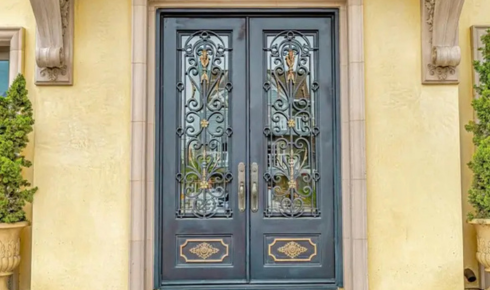
There’s a point in any home project where choices start to blur together. You scroll through designs, save a few favorites, maybe even change your mind a couple of times. Doors, oddly enough, fall right into that category.
You’d think it would be simple — pick something strong, something that looks good, done. But the more you look at iron doors, the more you realize there’s a lot going on beneath the surface. Style, structure, proportion… even how it fits with the rest of your home.
And somehow, all of that matters.
It Usually Starts With a Feeling, Not a Plan
Most people don’t begin with technical details. They start with a feeling.
Maybe you want something modern, clean lines, nothing too decorative. Or maybe something a bit more classic, with subtle curves or patterns that give it character.
That’s where styled iron door collections come in. They’re not just random designs grouped together — they’re curated in a way that helps you see what direction you’re leaning toward.
And honestly, that helps more than people expect. Instead of staring at hundreds of options, you start to recognize patterns in what you like. It becomes less overwhelming, more intuitive.
Matching the Door to the Home (Not Just Your Taste)
Here’s where things get a little tricky.
What you like and what fits your home aren’t always the same thing. A bold, intricate design might look amazing on its own, but does it match the overall architecture? Does it feel like it belongs there?
This is where architectural door options really start to make sense. They’re designed with context in mind — modern homes, traditional facades, transitional styles that sit somewhere in between.
It’s not about limiting your choices. It’s about guiding them.
Because when a door matches the structure around it, the entire home feels more cohesive. More intentional. And you don’t have to work as hard to make everything else look good.
When Flexibility Becomes the Real Advantage
There’s a moment, usually somewhere in the middle of the decision process, where you realize you want something slightly different.
Not completely custom, maybe. But not exactly what you’re seeing either.
That’s where design flexibility becomes important. It gives you room to adjust — to tweak proportions, finishes, maybe even small details that make the door feel more aligned with your space.
It’s not about creating something complicated. Sometimes it’s as simple as changing the glass type, softening a pattern, or adjusting the color slightly.
Those small changes can make a big difference. And they help you land on something that feels more personal, without overthinking every detail.
Why Simpler Often Feels Better Over Time
It’s tempting to go for something eye-catching. Something that stands out immediately.
And there’s nothing wrong with that.
But over time, simpler designs tend to age better. They don’t rely on trends or overly specific styles. They just… work.
Clean lines, balanced proportions, a finish that complements rather than competes — these things might not feel exciting at first, but they hold up.
And when you’re seeing the same door every day, that consistency matters more than you might expect.
Living With the Choice You Make
This part doesn’t get talked about enough — what it’s like to actually live with the door.
Not the installation day, not the first impression, but the everyday experience.
Opening it in the morning. Closing it at night. Seeing it from the street, from inside, from different angles and lighting conditions.
A well-chosen iron door settles into your routine. It doesn’t demand attention. It doesn’t feel out of place.
It just becomes part of the home.
And honestly, that’s what most people are looking for — something that fits so naturally, you stop thinking about it.
The Small Details That Add Up
Sometimes, it’s not the overall design that makes the difference. It’s the smaller elements.
The handle placement. The way the glass is framed. The finish that subtly changes in different lighting.
These aren’t things you notice all at once. But over time, they shape how the door feels.
And when those details are right, the whole design feels more complete.
Avoiding the Trap of Too Many Options
One of the hardest parts of choosing an iron door is knowing when to stop looking.
There’s always another design, another variation, another “what if.”
But at some point, you have to trust your instincts.
If a door feels right — if it fits your home, your style, and your everyday needs — that’s usually enough.
Chasing perfection often leads to more confusion than clarity.
Closing Thoughts That Feel Real
Choosing an iron door isn’t just about picking a design. It’s about finding something that fits — visually, practically, and even emotionally, in a quiet kind of way.
The right door doesn’t need to prove anything. It doesn’t need to stand out in an obvious way.
It just needs to feel like it belongs.
And when it does, the rest of the home seems to fall into place around it — almost without trying.
