Every business has its share of unexpected expenses. Sometimes it’s a piece of equipment that stops working, an unusually high utility bill, or a maintenance issue that seems to return every few weeks. What many business owners overlook is how often water quality may contribute to these problems. From mineral deposits inside heating equipment to sediment collecting in plumbing components, unsuitable water conditions can gradually affect daily operations.
Exploring different business water treatment and filtration options can help commercial property owners in Aledo, Texas, identify practical improvements that support equipment performance and operational consistency.
The goal isn’t to install the most sophisticated equipment available. It’s to understand how your business uses water and find treatment that makes financial and operational sense.
Understanding Where Water Problems Begin
Before purchasing filtration equipment, take a closer look at how water moves through your facility. Which machines depend on it? Where do maintenance problems occur most frequently? Are employees regularly removing mineral deposits from equipment?
These questions can reveal more than you might expect.
Hardness minerals may contribute to scale formation inside heating equipment, while suspended particles can accumulate within valves and appliance screens.
In other situations, dissolved substances may interfere with specific manufacturing processes or influence beverage quality.
Reliable testing helps identify which water characteristics require attention. Combining these findings with maintenance records can provide a clearer understanding of where treatment might deliver the greatest value.
Finding Filtration That Matches Your Facility
A small neighborhood café and a large manufacturing facility are unlikely to have identical water requirements. Even businesses within the same industry can experience different challenges.
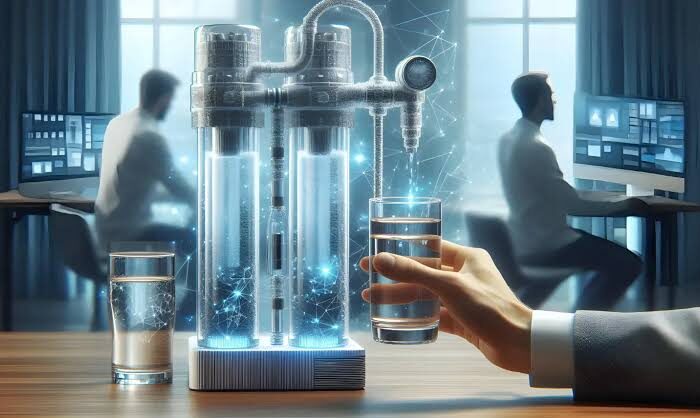
Effective water filtration for commercial facilities should account for incoming water conditions, daily consumption, peak flow requirements, and the quality objectives associated with particular applications.
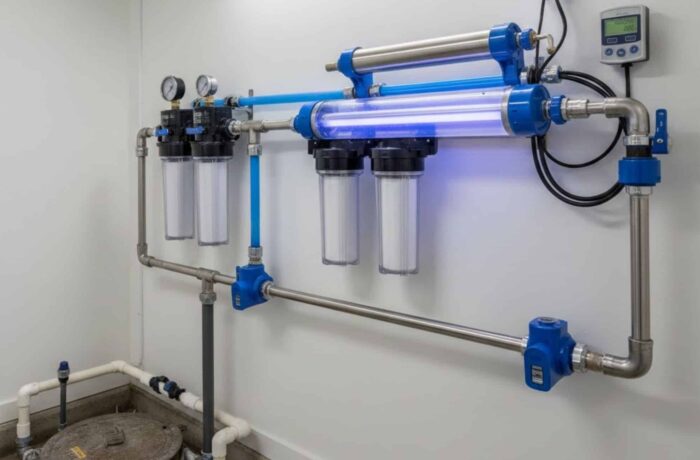
Sediment filters can help capture suspended particles, while activated carbon may reduce chlorine and certain unwanted tastes and odors.
Specialized filtration media can address additional substances when appropriately selected.
Some facilities benefit from treating water centrally, while others require dedicated equipment for individual processes.
Understanding these differences helps businesses avoid spending money treating water to a higher level than a particular application actually requires.
When Specialized Treatment Becomes Necessary
Industrial operations sometimes demand greater precision than ordinary commercial properties. Water composition can influence production consistency, equipment reliability, and the effectiveness of certain manufacturing processes.
Experienced providers offering industrial water treatment services can help businesses evaluate these requirements and identify suitable treatment technologies.
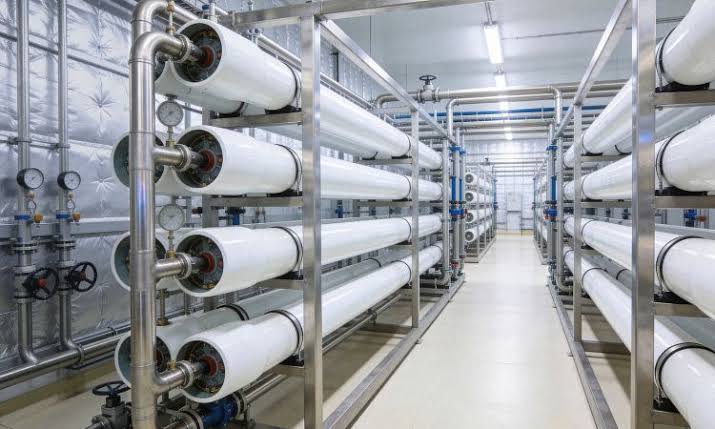
Depending on the application, facilities may require softening, membrane separation, specialized filtration, or a combination of treatment methods.
Reverse osmosis, for instance, may help reduce dissolved substances when a process requires water with lower mineral concentrations.
However, treatment specifications should always reflect the facility’s actual operational requirements.
Installing equipment without clearly defined water quality objectives can lead to unnecessary expenses and disappointing results.
Taking a Closer Look at Maintenance Expenses
A maintenance invoice might not immediately seem connected to water quality. But examining several months of repair records can reveal interesting patterns.
Perhaps employees regularly descale heating equipment, replace clogged filters, or clean mineral deposits from machinery.
These responsibilities consume both money and working hours.
Appropriate treatment can help address some of the underlying conditions responsible for recurring maintenance concerns.
For example, reducing excessive hardness may help limit new scale formation, while sediment filtration can reduce particulate accumulation within connected equipment.
Treatment won’t automatically reverse existing damage, but it can complement a preventive maintenance strategy.
Keeping records before and after installation also helps businesses determine whether their investment is providing measurable value.
Planning for Busy Days, Not Just Average Consumption
Imagine a commercial laundry operating at full capacity or a restaurant preparing for a particularly busy weekend. Water consumption during these periods can be considerably higher than usual.
Equipment selected solely according to average daily usage may struggle to accommodate peak demand.
Flow capacity, storage requirements, incoming water pressure, and regeneration schedules all deserve attention during system planning.
For businesses requiring uninterrupted soft water, alternating tank configurations may offer practical advantages.
Facilities relying on membrane treatment might also need sufficient storage to accommodate periods when treated water demand exceeds production.
A dependable system should support your busiest working hours, not simply perform well when business is quiet.
Making Water Treatment Easier to Manage
Business owners already have plenty of responsibilities. Ideally, maintaining water treatment equipment shouldn’t become another complicated daily task.
Accessible equipment, straightforward controls, and clearly defined servicing schedules can make ongoing maintenance considerably easier.
When consulting a provider such as Elders Water, discuss replacement component availability, operating expenses, performance monitoring, and maintenance arrangements.
Ask who will be responsible for routine inspections and how employees can recognize potential treatment problems.
It’s also worthwhile to establish measurable water quality objectives and arrange appropriate testing.
A simple maintenance record can help facility managers identify changes in performance before they develop into more disruptive issues.
Investing in Water Quality With the Future in Mind
Businesses change over time. Additional equipment gets installed, production increases, and customer demand evolves. Water treatment requirements may change alongside these developments.
For commercial and industrial properties in Aledo, choosing equipment with future operational needs in mind can be a sensible long-term decision.
Start with reliable information, prioritize the water quality concerns affecting your operations, and select treatment that offers practical benefits without unnecessary complexity.
Better water management isn’t about chasing every technological advancement. It’s about making informed decisions that support the work your business does every day.
When essential equipment runs reliably and recurring maintenance becomes more manageable, there’s more time to focus on customers, employees, and future growth.
And that’s where a thoughtfully planned water treatment investment can truly earn its value.