

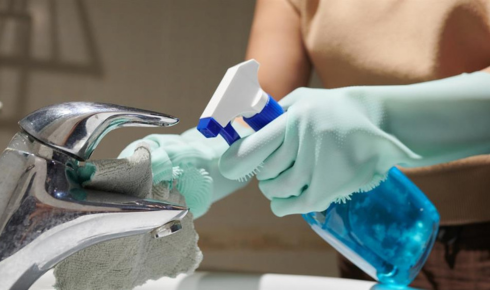
There’s a certain kind of tired that comes from doing the same thing over and over again… and not getting the result you expect. You clean the dishes, wipe the sink, rinse the glasses—only to find faint marks staring back at you later.
It’s not a big problem. Not urgent. Just persistent enough to be annoying.
And if you’ve ever stood there wondering why your “clean” doesn’t quite look clean, you’re not alone.
When Cleaning Starts Feeling Like Repetition
At first, it feels like a minor inconvenience. A few marks here and there. Maybe your glassware looks a bit cloudy, or your taps don’t stay shiny for long.
So you try harder. Different detergents, stronger cleaners, maybe a bit more scrubbing. You experiment. Adjust. Repeat.
But somehow, the results don’t really change.
That’s when people begin searching for ways to remove spots stains, often without realizing that the issue isn’t in their cleaning method—it’s in the water itself.
Because if the water carries minerals, every rinse leaves something behind. No matter how clean the surface was before.
The Invisible Layer You Keep Cleaning
Here’s the tricky part: you’re not just cleaning dirt—you’re dealing with residue.
Hard water contains calcium and magnesium. When water dries, those minerals don’t vanish. They settle. They cling to glass, metal, and tile, creating that faint haze or chalky texture.
You wipe it away, sure. But the next time water touches that surface, the cycle starts again.
It’s not a failure of effort. It’s a mismatch between what you’re trying to achieve and what your water is doing behind the scenes.
Everyday Signs You Might Be Overlooking
The signs are subtle, which is why they’re easy to ignore.
Glasses that never quite sparkle. Shower doors that collect marks within hours. A kettle that needs constant descaling. Even your dishwasher might start leaving behind streaks despite a full cycle.
Individually, these things don’t seem serious. But together, they paint a pretty clear picture.
And once you notice the pattern, it’s hard to unsee.
Why Quick Fixes Only Go So Far
It’s natural to look for quick solutions. After all, who wants to overhaul their setup when a better cleaner might do the trick?
And to be fair, some fixes help. Rinse aids, vinegar rinses, microfiber cloths—they all improve the situation to some degree.
But they don’t address the source.
If the water itself continues to carry minerals, you’re essentially managing the symptoms instead of solving the problem. That’s why the results often feel temporary.
You get a brief win, and then you’re back where you started.
Looking at the Source Instead
At some point, the idea shifts. Instead of asking, “How do I clean this better?” you start asking, “Why does it keep happening?”
That’s where broader solutions come into play.
Many households eventually explore water treatment systems—not because they’re looking for luxury, but because they’re tired of the repetition.
These systems work at the entry point of your home’s water supply, reducing the minerals and impurities before they reach your taps. It’s a more foundational approach, one that changes the way water behaves across everything you use.
It’s less about reacting, more about preventing.
The Difference You Notice Slowly
What’s interesting is how gradual the improvement feels.
At first, you might just notice that your dishes come out a bit clearer. Then you realize your taps stay shiny longer, your glassware doesn’t need extra wiping, and your cleaning routine feels… lighter.
You’re not working as hard for the same outcome. In fact, you’re getting better results with less effort.
And that’s when it clicks.
It was never about cleaning more—it was about changing what you were cleaning with.
A More Effortless Kind of Clean
There’s something satisfying about things just working.
When water quality improves, the little frustrations fade. You don’t think about wiping down surfaces twice or re-rinsing glasses. You trust the process again.
And that trust makes a difference. It saves time, reduces effort, and brings a sense of ease back into daily routines.
Not dramatic, not life-changing—just quietly better.
Finding Your Own Way Forward
Not everyone takes the same approach, and that’s okay.
Some people stick with small adjustments and manage just fine. Others prefer a more permanent fix, especially if the issue affects multiple areas of the home.
It really comes down to how much those small annoyances matter to you—and how much time you want to spend dealing with them.
There’s no single right answer. Just options that lead to a smoother, simpler experience.
Letting Go of the Constant Fix
At the end of the day, cleaning shouldn’t feel like a loop you’re stuck in.
It should be straightforward. Predictable. Done once, not twice.
When you stop fighting your water—and start working with it instead—everything shifts a little. Surfaces stay cleaner. Appliances run smoother. And your routine feels less like effort, more like habit.
Sometimes, that’s all it takes to make a home feel just a bit more at ease.
